Project Description
Fire Hose
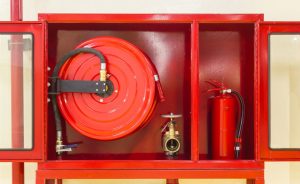
A fire hose is a high-pressure hose that conveys water or other flame retardant, for example, foam to a flame to douse it. Outside, it joins either to a flame motor or a fire hydrant. Inside, it can for all time append to a structure’s standpipe or pipes framework. The typical operating pressure of a fire hose will dissent somewhere within the vary of eight and a pair of0 bar (800 and 2,000 KPA; 116 and 290 psi) whereas per the NFPA 1961. Fire Hose Standard, its blasting pressure is more than 110 bar. After use, a fire hose is generally hung to dry, since standing water that is remaining in parts of a hose for quite a while can crumble the material and render it inconsistent or unusable. In this way, the run of the mill fire station frequently has a high structure to suit the length of a hose for such protection support.
Currently fire hoses utilize an assortment of normal and manufactured textures and elastomers in their development. These materials enable the hoses to be put away wet without decaying and to oppose the harming impacts of presentation to daylight and synthetic substances. Present day fire hoses are additionally lighter load than more seasoned structures, and this has decreased the physical strain on firemen. Different gadgets are winding up progressively pervasive that expel the air from the inside of fire hose, regularly alluded to as flame hose vacuums. This procedure makes hoses little and fairly inflexible, hence permitting more fire hose to be pressed or stacked into a similar compartment on a putting out fires device.
Types of Fire Hose
Attack Fire Hose
This fire protection component contains the manual and the automatic detection of fire. In this fire protection system, fire protection equipment are installed such as fire alarm systems or fire extinguishers. The fire alarm systems used in the buildings can be manual, automatic, one stage fire alarm or two stage fire alarm system.
It is highly recommended that fire alarm system and fire extinguisher should be working all the time. The owner of the building or the one in charge must maintain the system in an operative condition and must replace any defective system.
Supply & Relay Fire Hose
These are vast width, texture secured, and adaptable hoses used to convey water from an inaccessible hydrant to the fire pumper or to hand-off water starting with one pumper then onto the next over a long separation.
These fire hoses go in ostensible inside distance across from 3.5 to 5.0 in (89 to 127 mm). They are intended to work at pressure up to around 300 psi (2,070 kPa) for the less widths and up to 200 psi (1,380 kPa) for the bigger breadths.
The standard length is 100 ft (30.48 m).
Booster Fire Hose
These are elastic secured, thick-walled, adaptable hose used to battle little flames. It holds its round cross-area when it isn’t experiencing tension and is normally carried on a reel on the flame pumper, instead of being put away level. Promoter hose comes in 0.75 and 1.0 in (19 and 25 mm) ostensible inside distances across and is intended to work at weights up to 800 psi (5,520 kPa). The standard length is 100 ft (30.48 m).
Suction Fire Hose
These are usually called hard suction and for the most part are elastic secured, semi-inflexible hose with interior metal fortifications. It is utilized to drain water out of unpressurized sources, for example, lakes or streams, by methods for a vacuum.
Suction hose runs in ostensible inside distance across from 2.5 to 6.0 in (64 to 152 mm). The standard length is 10 ft (3.05 m)
Gallery